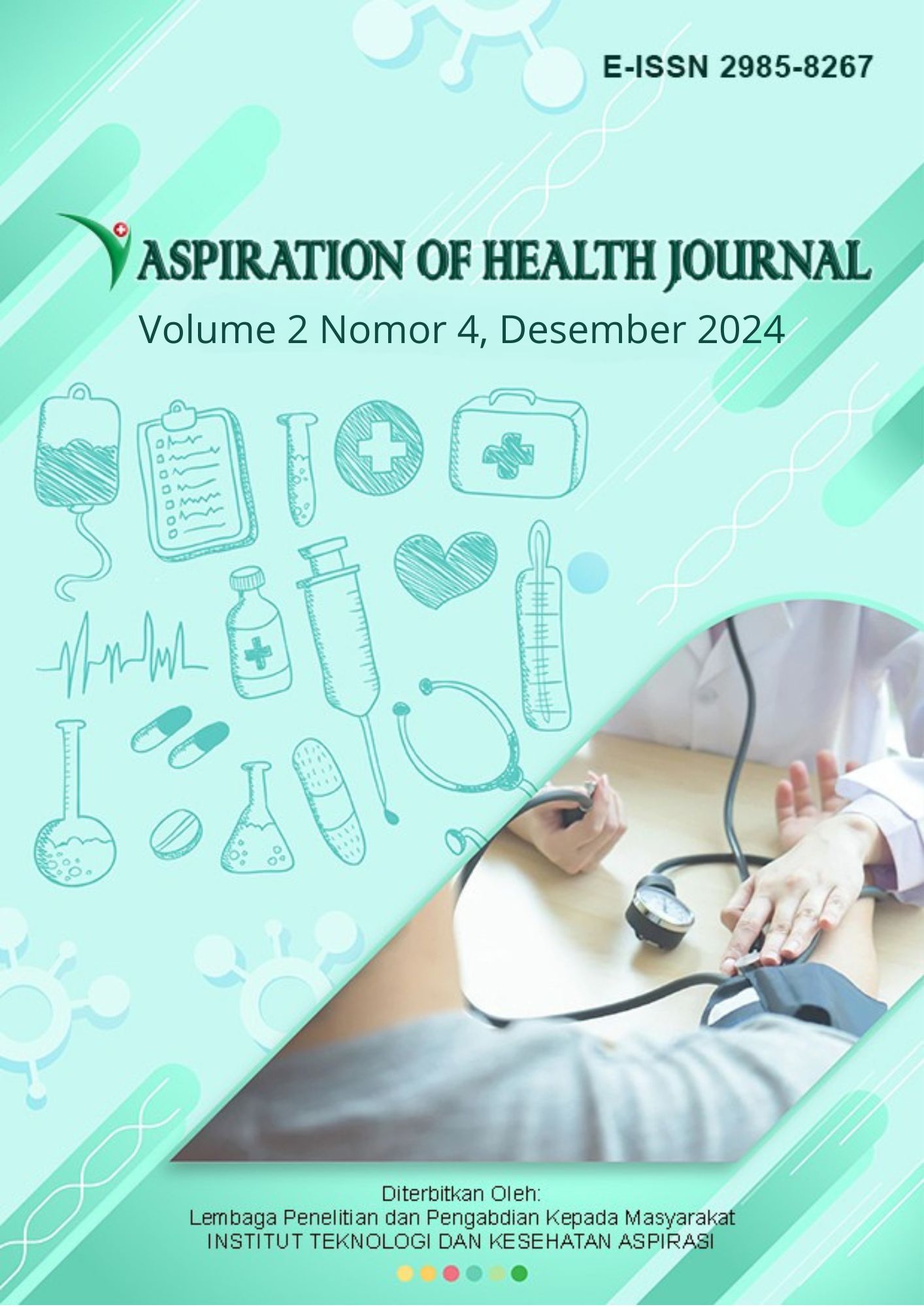
Hubungan Media Sosial dengan Kesehatan Mental Mahasiswa: Narrative Literature Review
DOI:
https://doi.org/10.55681/aohj.v2i4.527Keywords:
media sosial, kesehatan mental, mahasiswa, narrative literature review, literasi digitalAbstract
Perkembangan media sosial telah mengubah pola komunikasi dan interaksi mahasiswa, sekaligus memberikan dampak terhadap kesehatan mental. Meskipun media sosial mendukung akses informasi, pembelajaran, dan hubungan sosial, penggunaannya yang berlebihan berpotensi meningkatkan risiko stres, kecemasan, depresi, gangguan tidur, serta kecanduan media sosial. Penelitian ini bertujuan mengkaji hubungan penggunaan media sosial dengan kesehatan mental mahasiswa melalui pendekatan narrative literature review. Penelusuran literatur dilakukan pada basis data Google Scholar, PubMed, dan ScienceDirect terhadap artikel yang diterbitkan pada periode 2020–2025. Sebanyak 20 artikel yang memenuhi kriteria inklusi dianalisis secara deskriptif untuk mengidentifikasi pola temuan yang konsisten. Hasil kajian menunjukkan bahwa intensitas penggunaan media sosial yang tinggi, social comparison, paparan konten negatif, dan problematic social media use berhubungan dengan meningkatnya risiko gangguan kesehatan mental pada mahasiswa. Sebaliknya, penggunaan media sosial yang adaptif berkontribusi terhadap peningkatan dukungan sosial, akses informasi kesehatan, dan kualitas hubungan interpersonal. Temuan ini menunjukkan bahwa dampak media sosial ditentukan oleh pola dan tujuan penggunaan serta kemampuan individu dalam mengelola aktivitas digital. Oleh karena itu, peningkatan literasi digital dan promosi kesehatan mental di perguruan tinggi diperlukan untuk mendorong penggunaan media sosial yang sehat dan bertanggung jawab.
Downloads
References
Abi-Jaoude, E., Naylor, K. T., & Pignatiello, A. (2020). Smartphones, social media use and youth mental health. Canadian Medical Association Journal, 192(6), E136–E141. https://doi.org/10.1503/cmaj.190434
American Psychological Association. (2023). Stress in America 2023: Mental health and our changing world. American Psychological Association.
Falgoust, G., Winterlind, E. L., Moon, P., Parker, A. J., Zinzow, H., & Madathil, K. (2022). Applying the uses and gratifications theory to identify motivational factors behind young adults' participation in viral social media challenges on TikTok. Human Factors in Healthcare. https://doi.org/10.1016/j.hfh.2022.100014
Fatima, A., Akhter, M. S., Kanekar, A., Roy, S., Mitra, R., Imade, B., & Sharma, M. (2025). A scoping review of the use and determinants of social media among college students. Healthcare, 13. https://doi.org/10.3390/healthcare13172234
Ghanayem, L. K., Shannon, H., Khodr, L., McQuaid, R. J., & Hellemans, K. G. C. (2024). Lonely and scrolling during the COVID-19 pandemic: Understanding the problematic social media use and mental health link among university students. Frontiers in Psychiatry, 15, 1247807. https://doi.org/10.3389/fpsyt.2024.1247807
Godard, R., & Holtzman, S. (2023). Are active and passive social media use related to mental health, wellbeing, and social support outcomes? A meta-analysis of 141 studies. Journal of Computer-Mediated Communication, 29. https://doi.org/10.1093/jcmc/zmad055
Hussenoeder, F. S. (2022). Social network sites as learning environments and their implications for mental health. Frontiers in Digital Health, 4, 939740. https://doi.org/10.3389/fdgth.2022.939740
Keles, B., McCrae, N., & Grealish, A. (2020). A systematic review: The influence of social media on depression, anxiety and psychological distress in adolescents. International Journal of Adolescence and Youth, 25(1), 79–93. https://doi.org/10.1080/02673843.2019.1590851
Li, C. (2026). The impact of social media use on college students' mental health: A narrative review. Frontiers in Public Health, 14, 1811098. https://doi.org/10.3389/fpubh.2026.1811098
Odgers, C. L., & Jensen, M. R. (2020). Annual research review: Adolescent mental health in the digital age: Facts, fears, and future directions. Journal of Child Psychology and Psychiatry, 61(3), 336–348. https://doi.org/10.1111/jcpp.13190
Qin, C., Li, Y., Wang, T., Zhao, J., Tong, L., Yang, J., & Liu, Y. (2024). Too much social media? Unveiling the effects of determinants in social media fatigue. Frontiers in Psychology, 15, 1277846. https://doi.org/10.3389/fpsyg.2024.1277846
Seidman, G., Hudak, L. M., & Langlais, M. (2025). Motivations for active and passive social media use and their relation to wellbeing. Human Behavior and Emerging Technologies. https://doi.org/10.1155/hbe2/8812526
Servidio, R., Soraci, P., Griffiths, M. D., Boca, S., & Demetrovics, Z. (2024). Fear of missing out and problematic social media use: A serial mediation model of social comparison and self-esteem. Addictive Behaviors Reports, 19. https://doi.org/10.1016/j.abrep.2024.100536
Twenge, J. M., & Farley, E. (2021). Not all screen time is created equal: Associations with mental health differ by activity and gender. Social Psychiatry and Psychiatric Epidemiology, 56(2), 207–217.
Valkenburg, P. M., Van Driel, I. I., & Beyens, I. (2021). The associations of active and passive social media use with well-being: A critical scoping review. New Media & Society, 24, 530–549. https://doi.org/10.1177/14614448211065425
Vannucci, A., Flannery, K. M., & Ohannessian, C. M. (2020). Social media use and anxiety in emerging adults. Journal of Affective Disorders Reports, 2, 100010.
West, M., Rice, S. M., & Vella-Brodrick, D. (2024). Adolescent social media use through a Self-Determination Theory lens: A systematic scoping review. International Journal of Environmental Research and Public Health, 21. https://doi.org/10.3390/ijerph21070862
World Health Organization. (2022). World mental health report: Transforming mental health for all. World Health Organization.
Xu, Y., Li, Y., Zhang, Q., Yue, X., & Ye, Y. (2022). Effect of social media overload on college students' academic performance under the COVID-19 quarantine. Frontiers in Psychology, 13, 890317. https://doi.org/10.3389/fpsyg.2022.890317
Zhan, Y., Luo, L., & Hu, X. (2025). Digital stress and problematic social media use among college students: Exploring dual emotional pathways and the moderating role of cognitive reappraisal. BMC Psychology, 13. https://doi.org/10.1186/s40359-025-03675-z
Zhao, N., Zhou, G., & Wang, Y. (2023). Social media use and mental health among university students: A systematic review and meta-analysis. BMC Public Health, 23, 1846.
Downloads
Published
How to Cite
Issue
Section
License
Copyright (c) 2024 Vivi Andrianingsih, Samsudin, Khairiyatun Sholihah

This work is licensed under a Creative Commons Attribution-ShareAlike 4.0 International License.