MAIN MENU
SUBMISSIONS
JOURNAL TEMPLATE
 |
INFORMATIONS
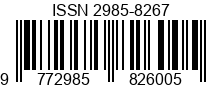
ISSN BARCODE
 |
ABSTRACTING & INDEXING
 |
 |
 |
STATISTIC OF AOHJ

Aspiration of Health Journal (AOHJ) recognizes that scientific inquiry and academic debate do not end upon publication. In the health sciences—encompassing public health, medicine, nursing, midwifery, pharmacy, nutrition, health technology, health analysis, medical records, health law, and hospital management—post-publication discussion is vital for validating clinical evidence, clarifying epidemiological methods, interrogating data interpretation, and advancing patient care standards.
The journal encourages constructive, evidence-based, and professional scholarly dialogue to uphold research integrity, clinical transparency, and the continual refinement of healthcare knowledge.
Post-publication discussions may address matters including, but not limited to:
The interpretation, reproducibility, and clinical or public health implications of published findings.
The validity of study designs, sampling methods, laboratory assays, diagnostic techniques, epidemiological calculations, and statistical analyses.
Theoretical frameworks, diagnostic criteria, and clinical care models.
Emerging empirical data, confirmatory trials, or contradictory clinical observations that strengthen or challenge published conclusions.
Inconsistencies, computational errors, missing ethical disclosures, or concerns regarding biomedical research integrity.
Translation into clinical guidelines, hospital operations, and healthcare policy.
All submissions must directly pertain to the specific article under discussion and must be substantiated by empirical data, methodological critique, or peer-reviewed literature.
Readers, researchers, and healthcare professionals who wish to comment on an article published in Aspiration of Health Journal (AOHJ) may submit a formal Letter to the Editor or Scholarly Commentary through the journal’s Open Journal Systems (OJS) platform or via the official editorial office email.
Submissions must:
Clearly identify the target article by its title, author names, volume, issue, and Crossref DOI (https://doi.org/10.55681/aohj).
Concisely outline the substantive scientific, clinical, or methodological issue being raised.
Include comprehensive citations and empirical evidence supporting the commentary.
Adhere to professional, respectful, and objective academic discourse.
Upon receipt of a substantive comment, the corresponding author of the original article will be invited to submit a formal Author Response. Where appropriate, the journal will publish the comment and the response together in a subsequent quarterly issue to provide readers with a balanced, peer-reviewed perspective.
The Editor-in-Chief (Arif Sofyandi, S.Kep., M.K.M.) or a designated Section Editor will conduct an initial screening of all submitted comments and author responses to assess their relevance, scientific rigor, clarity, and adherence to publication ethics.
The editorial office may:
Send the commentary and response for external peer review by independent subject-matter specialists or biostatisticians.
Request revisions to ensure comments remain constructive, technically focused, and free of inflammatory language.
Decline submissions that lack empirical merit, present unsubstantiated speculation, include defamatory remarks, or contain personal attacks.
Editorial decisions will rest strictly on scientific quality, evidence validity, and relevance to the health disciplines.
Commentators: Must ensure that their analyses are accurate, methodologically sound, and correctly referenced. Commentators must formally declare any potential conflicts of interest (financial, clinical, personal, or institutional) and avoid misleading representations of the original authors' work.
Original Authors: Are expected to engage constructively with substantive critiques, offering empirical clarification, supplementary data breakdowns, or necessary corrections in a professional manner.
All Participants: Must observe biomedical ethics, protect patient confidentiality (ensuring no identifiable patient information is compromised during discussions), and respect academic freedom.
Post-publication discussions may uncover unintentional data errors, miscalculations, or ethical breaches requiring formal editorial remediation. The journal handles these situations in accordance with Committee on Publication Ethics (COPE) guidelines:
Corrigendum / Erratum: Published when an identified calculation, typographical, or technical error can be corrected without altering the core findings or clinical conclusions of the study.
Expression of Concern: Issued by the Editor-in-Chief when unresolved, serious methodological or data discrepancies arise, alerting readers while an institutional or formal investigation is underway.
Retraction: Enacted if the discussion and subsequent investigation demonstrate that the findings are fundamentally flawed, falsified, fabricated, heavily plagiarized, or pose a risk to clinical and public health practice.
A post-publication comment alone does not constitute proof of error or misconduct; any formal editorial action must be grounded in verified documentation and systematic inquiry.
Accepted Letters to the Editor, Commentaries, and Author Responses are published as citable scholarly items assigned their own Crossref DOIs. They are permanently linked bi-directionally to the original published Version of Record on the journal’s website, ensuring full transparency for indexing databases and readers.
Editorial communications and peer reviews concerning post-publication discussions are archived securely within the journal's management system in compliance with data privacy standards.
All post-publication discourse must adhere to rigorous standards of academic honesty and mutual respect. The journal strictly prohibits:
Plagiarism, ghostwriting, and fabricated evidence in commentaries.
Ad hominem arguments, professional harassment, or defamatory language.
Unattributed or deceptive use of artificial intelligence to generate critiques.
Allegations of deliberate research misconduct raised within comments will be routed directly to the procedures outlined in the AOHJ Policy on Allegations of Research Misconduct.
Aspiration of Health Journal (AOHJ), published by LPPM Institut Teknologi dan Kesehatan Aspirasi, upholds post-publication discussion as a cornerstone of rigorous health sciences scholarship. Through open critique, objective editorial evaluation, and transparent corrections, the journal safeguards the reliability of published medical and health knowledge for the benefit of researchers, healthcare practitioners, and society.
Publisher: LPPM Institut Teknologi dan Kesehatan Aspirasi
E-ISSN: 2985-8267
DOI Prefix: https://doi.org/10.55681/aohj
Editor-in-Chief: Arif Sofyandi, S.Kep., M.K.M.
Policy Objective: To support continuous, evidence-based post-publication discourse and maintain the integrity of the health sciences scholarly record.
MAIN MENU
SUBMISSIONS
JOURNAL TEMPLATE
|
INFORMATIONS
ISSN BARCODE
|
ABSTRACTING & INDEXING
|
|
| |
STATISTIC OF AOHJ
LPPM Institut Teknologi Dan Kesehatan Aspirasi
Jl. Jurusan Anjani-Suralaga KM.04 Suralaga, Lombok Timur - NTB 83651
e-mail: aoh.journals@gmail.com or aohj@itka.ac.id

This work is licensed under a Creative Commons Attribution-ShareAlike 4.0 International License.