MAIN MENU
SUBMISSIONS
JOURNAL TEMPLATE
 |
INFORMATIONS
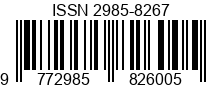
ISSN BARCODE
 |
ABSTRACTING & INDEXING
 |
 |
 |
STATISTIC OF AOHJ

Aspiration of Health Journal (AOHJ)
Aspiration of Health Journal (AOHJ), published by LPPM Institut Teknologi dan Kesehatan Aspirasi, is committed to maintaining the accuracy, transparency, scientific rigor, and integrity of the scholarly record. Given that health research directly impacts clinical practices, patient safety, public health directives, and healthcare governance, the journal recognizes the critical imperative to address post-publication errors, methodological flaws, or ethical concerns promptly and decisively.
This policy establishes the formal procedures for issuing corrections (corrigenda and errata), publishing editorial expressions of concern, and retracting articles when warranted. All decisions are conducted in strict alignment with the guidelines established by the Committee on Publication Ethics (COPE) and international biomedical research standards.
A formal correction notice is issued when an error or omission is identified in a published article that warrants notification to the scientific and medical community, but does not invalidate the study's primary methodology, core findings, or clinical conclusions.
Corrections are classified as follows:
Erratum: An error introduced by the journal during the production, layout, copyediting, or online publication stages.
Corrigendum: An error introduced by the authors during manuscript drafting, data transcription, or proof verification.
Corrections address, where appropriate:
Inaccuracies in author names, institutional affiliations, contact emails, or contributor credits.
Minor computational, numerical, or statistical discrepancies in tables, figures, charts, or clinical dosing descriptions that do not compromise the overall outcome.
Clarifications or missed disclosures in funding statements, institutional grant identifiers, or conflict of interest declarations.
Omissions in ethics approval documentation, institutional review board (IRB) numbers, informed consent details, or clinical trial registration identifiers.
Necessary updates to scientific nomenclature, diagnostic terminology, or literature citations.
The Editor-in-Chief (Arif Sofyandi, S.Kep., M.K.M.) evaluates the gravity and implications of the reported error. When approved, a standalone, citable correction notice will be published in the next regular quarterly issue, assigned an independent Crossref DOI, and bidirectionally linked to the original Version of Record (https://doi.org/10.55681/aohj). Minor typographical corrections that do not alter scientific or clinical meaning will not trigger a formal correction notice.
A retraction is enacted when the scientific reliability, empirical validity, or ethical foundation of a published article is fundamentally undermined. Retraction serves to correct the scholarly record and formally notify researchers, clinicians, and health policymakers that the findings or data cannot be relied upon.
Grounds for retraction include, but are not limited to:
Clear evidence that clinical, epidemiological, diagnostic, or experimental findings are unreliable due to data fabrication, falsification, calculation fraud, or gross methodological error.
Extensive plagiarism, redundant/duplicate publication (salami slicing), or substantial unattributed text recycling without editorial consent.
Unethical human or animal experimentation, failure to obtain institutional ethical approval (IRB/HREC), or severe breaches of patient privacy and informed consent.
Deliberate manipulation of biomedical images (e.g., microscopy, electropherograms, radiographs), selective suppression of adverse clinical outcomes, or data alteration.
Subversion of the peer-review process, fake reviewer accounts, systematic citation cartels, or ghost/gift authorship arrangements.
Any scientific misconduct or legal infringement that renders the manuscript invalid or unsafe for the healthcare literature.
Retraction is never used to arbitrate routine scholarly disagreements, theoretical disputes, or differing clinical interpretations where the original findings remain empirically sound.
When an issue indicating potential retraction is identified, AOHJ follows a systematic and documented procedure:
Initial assessment: The Editor-in-Chief or a designated editorial board member examines the concerns, similarity reports, raw datasets, or ethical documentation to establish prima facie evidence.
Communication with authors: The corresponding author is formally notified in writing and given a defined period (normally 14 to 30 days) to supply an explanation, original laboratory records, clinical audit logs, or institutional verification.
Further investigation: When technical or clinical complexities require broader evaluation, the journal consults independent subject-matter experts, biostatisticians, or institutional ethics committees.
Editorial decision: After an impartial synthesis of the evidence and responses, the Editor-in-Chief decides whether to issue a correction, an expression of concern, a retraction, or dismiss the case.
Publication of notice: If retraction is warranted, the journal issues a clear, bi-directionally linked Retraction Notice titled "Retraction: [Original Article Title]", detailing the definitive grounds for the decision and identifying who initiated the retraction.
Record preservation: In accordance with digital archiving standards, the original article is not deleted from the website or repository. The published PDF is retained with a prominent, indelible watermark indicating "RETRACTED" across every page, and the HTML abstract clearly indicates the retraction status. Silent removal of text occurs exclusively under extreme legal mandates (e.g., court orders, severe defamation, or immediate public health emergencies).
An Expression of Concern is published by the Editor-in-Chief when:
Credible, serious concerns regarding the integrity of the data, methodology, or ethics of a published paper have been raised, but conclusive proof is not yet established.
An institutional investigation by an author's university, hospital, or funding agency is ongoing, and readers require timely caution while final findings are pending.
The authors fail to cooperate with editorial requests for raw data, but sufficient evidence has not yet accumulated to justify an immediate full retraction.
The notice details the specific nature of the concern neutrally and without prejudging the outcome. It will be updated, converted to a formal retraction, or resolved with an explanatory notice once the investigation reaches completion.
Authors must notify the AOHJ editorial office immediately if they discover an error, miscalculation, or oversight in their published work. Authors are required to cooperate fully during editorial inquiries, submitting raw datasets, statistical logs, and institutional approvals upon request.
If a correction is required, authors must assist in drafting an accurate, exhaustive explanation. If a retraction is determined necessary, authors will be invited to submit an author statement, though author disagreement or non-responsiveness will not hinder the journal from executing a retraction when supported by the evidence.
The Editor-in-Chief and editorial board manage all correction and retraction proceedings impartially, confidentially, and with strict independence from institutional, commercial, or personal pressures.
Decisions rest squarely on evidentiary rigor and the protection of clinical science. The editorial team will seek independent advice when handling specialized biomedical or statistical disputes and will coordinate directly with author-affiliated institutions when investigative resources beyond the journal's jurisdiction are required.
Correction notices, expressions of concern, and retractions are published open-access, assigned a unique Crossref DOI, listed in the journal’s table of contents, and registered across indexing platforms (including Google Scholar and SINTA).
The journal maintains strict version control to protect the historical transparency of the digital record, ensuring that any subsequent modifications to the literature are traceable, permanent, and accessible to readers and indexers.
Authors who disagree with an editorial decision regarding a correction, expression of concern, or retraction may file a written appeal with the Editor-in-Chief within 30 days of the decision notice.
Appeals must be founded on verifiable procedural irregularities or substantial new evidence; theoretical or subjective disagreements will not be accepted. The appeal will be adjudicated by an ad hoc review committee of senior editorial board members with no prior involvement in the case. The submission of an appeal does not automatically halt the publication of a notice where urgent safeguarding of the scientific record is warranted.
Aspiration of Health Journal (AOHJ), published by LPPM Institut Teknologi dan Kesehatan Aspirasi, upholds the correction and preservation of the scientific record as essential to responsible health literature publishing. Corrections, expressions of concern, and retractions will be executed with proportionality, fairness, and transparency, ensuring that health professionals, researchers, and policymakers maintain uncompromised confidence in the integrity of the journal's published corpus.
Publisher: LPPM Institut Teknologi dan Kesehatan Aspirasi
E-ISSN: 2985-8267
DOI Prefix: https://doi.org/10.55681/aohj
Editor-in-Chief: Arif Sofyandi, S.Kep., M.K.M.
Publication Frequency: 4 issues per year (March, June, September, December)
MAIN MENU
SUBMISSIONS
JOURNAL TEMPLATE
|
INFORMATIONS
ISSN BARCODE
|
ABSTRACTING & INDEXING
|
|
| |
STATISTIC OF AOHJ
LPPM Institut Teknologi Dan Kesehatan Aspirasi
Jl. Jurusan Anjani-Suralaga KM.04 Suralaga, Lombok Timur - NTB 83651
e-mail: aoh.journals@gmail.com or aohj@itka.ac.id

This work is licensed under a Creative Commons Attribution-ShareAlike 4.0 International License.